Cameron Powell · 22 October 2026
Italian Heritage Projects Fuel Fresh Paths for Journalism Trainees Mastering Digital Tools
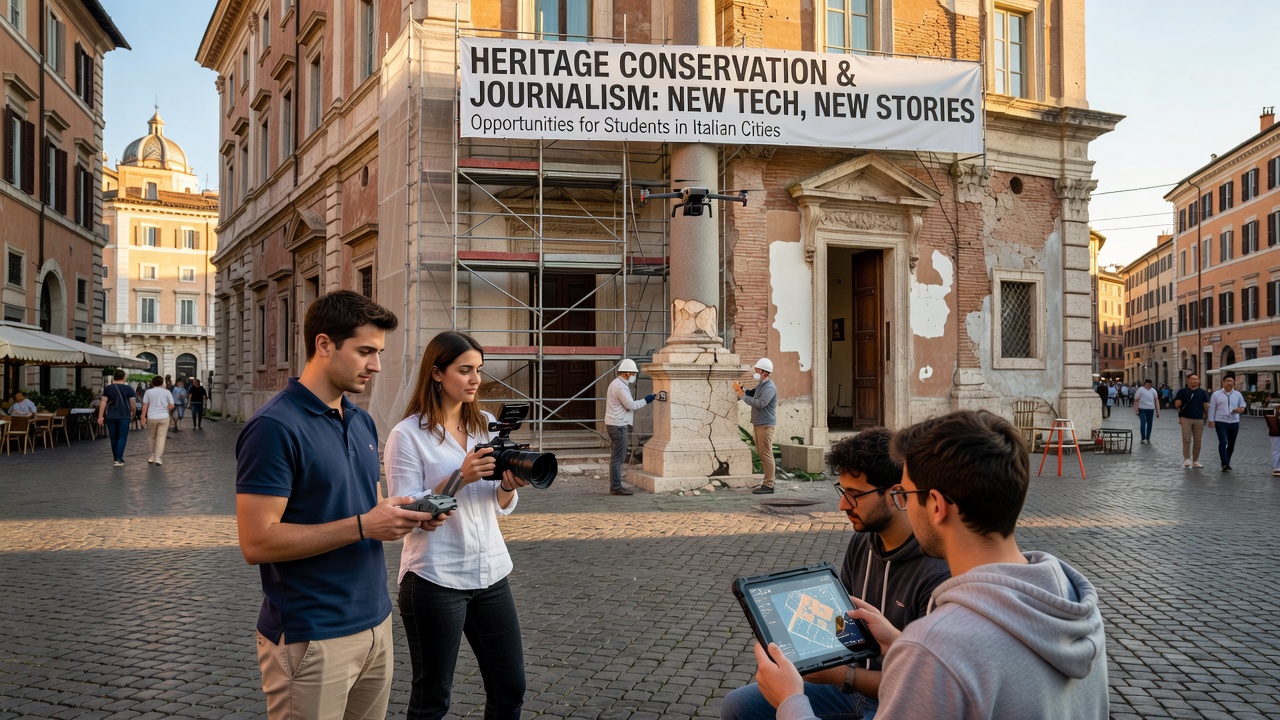
Heritage conservation efforts across Italian cities have expanded rapidly since the early 2020s, and these initiatives now generate structured opportunities for journalism students who work with emerging reporting technologies, according to records from the Italian Ministry of Culture. Cities such as Venice, Florence, and Rome maintain ongoing restoration campaigns that incorporate 3D laser scanning, drone mapping, and augmented reality overlays, while universities in the same regions have aligned coursework with these projects to train reporters in data visualization, interactive storytelling, and real-time field documentation.
Conservation Scale and Technological Integration
Restoration teams in Venice completed the latest phase of the MOSE flood barrier system upgrades in 2025, and they continue to monitor subsidence patterns with satellite-linked sensors that feed public dashboards, whereas Florence has applied photogrammetry to document the Duomo's structural changes since 2023. Rome's Colosseum restoration, managed by the Parco Archeologico del Colosseo, reached a new documentation milestone in October 2026 when crews released updated point-cloud models for educational reuse. These projects produce large datasets that journalism programs at institutions like the University of Bologna and Sapienza University of Rome convert into reporting exercises, allowing students to combine sensor readings with on-site interviews and visual reconstructions.
Student Training Programs and Reporting Methods
Journalism departments have introduced modules that require students to operate lightweight drones for aerial heritage surveys and to build VR environments from laser scans, according to course catalogs published by Politecnico di Milano. Trainees learn to embed metadata from conservation sensors into multimedia packages that update automatically when new readings arrive, and they practice live-streaming from restricted restoration zones using helmet-mounted cameras. One cohort at the University of Padua completed a semester-long assignment in spring 2026 that tracked moisture levels inside the Scrovegni Chapel and produced an interactive map for regional broadcasters. The approach draws on techniques refined by the Getty Conservation Institute in Los Angeles, which has shared open-source workflows with European partners since 2022.
Regional Collaborations and Data Sharing
Italian municipalities coordinate with the European Heritage Alliance to standardize data formats, while students gain access to these repositories through university partnerships. In October 2026 several programs launched pilot projects that pair local reporters with conservation engineers to co-author stories on material degradation rates, and the resulting pieces appear on municipal websites as well as national news outlets. Observers note that the combination of field access and technical training reduces the time between data collection and publication, because students apply automated scripting tools to generate charts directly from sensor feeds. External research from the Canadian Conservation Institute has documented similar efficiency gains when students participate in heritage monitoring, providing a comparative benchmark for Italian programs.
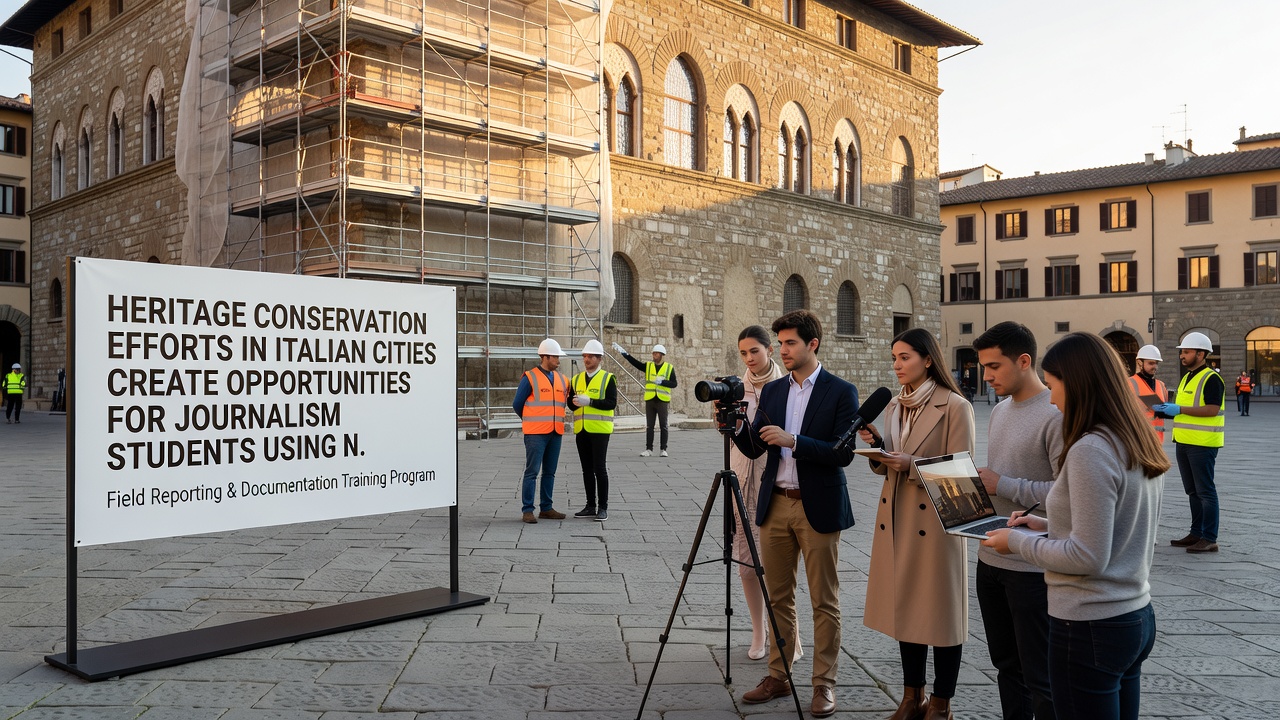
Programs also emphasize ethical handling of restricted site imagery, and instructors require trainees to follow guidelines issued by the Italian Ministry of Culture that limit commercial reuse of high-resolution models. Students therefore develop layered stories that combine public-domain scans with original audio captured during guided visits, creating pieces that satisfy both academic rubrics and editorial standards at regional publications.
Outcomes Observed in 2026
By October 2026, more than 180 journalism students across five Italian universities had contributed to published reports on heritage sites, with several pieces incorporating real-time AR overlays that let readers view proposed restoration options on mobile devices. Data released by the Ministry of Culture shows a 27 percent increase in student-accredited media coverage of conservation projects compared with 2024 figures, while faculty report higher placement rates for graduates who demonstrate proficiency in these tools. Universities continue to refine curricula around the same sensor networks and modeling platforms used by professional conservators, ensuring that reporting skills remain aligned with the technical demands of ongoing preservation work.
Conclusion
Italian heritage conservation campaigns therefore function as living laboratories for journalism education, supplying both raw material and technical infrastructure that students convert into contemporary reporting formats. The pattern established in 2026 indicates continued expansion of these partnerships as cities release additional datasets and universities adjust course requirements to match evolving documentation standards.