Cameron Powell · 8 October 2026
Eastern European Podcasters Navigate Data Ethics Through Anonymous Sharing Protocols in Political Coverage
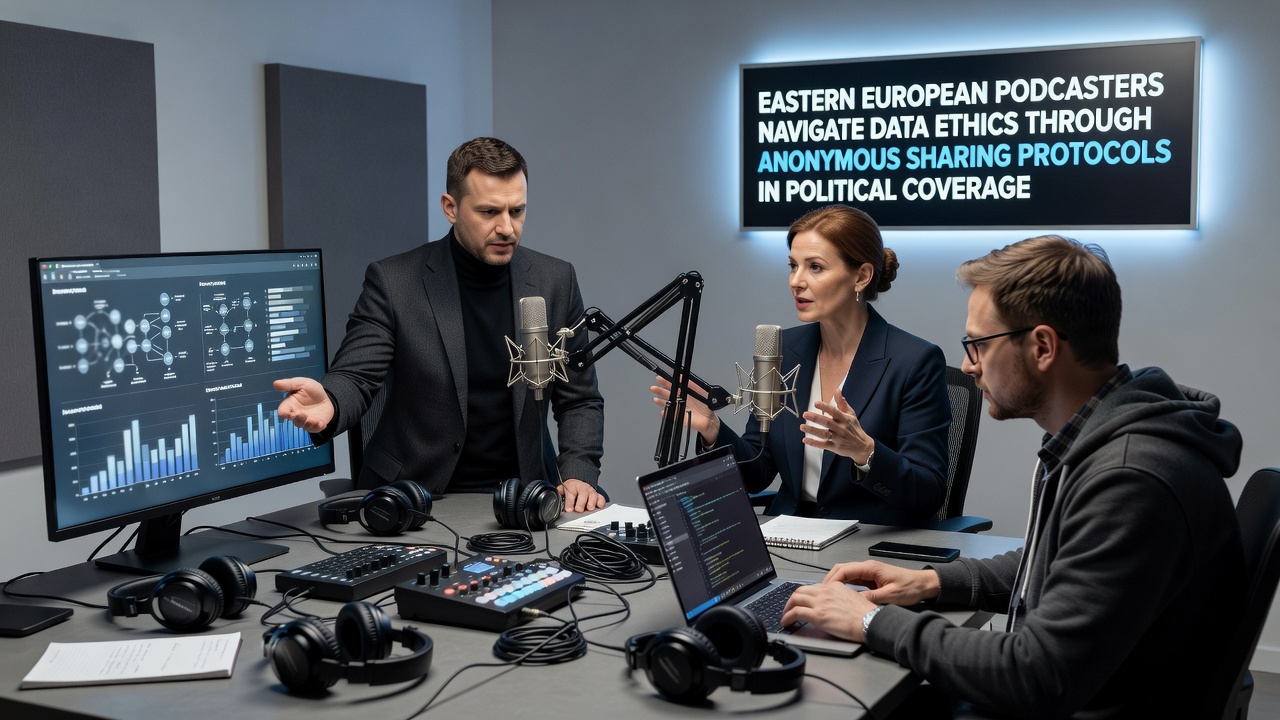
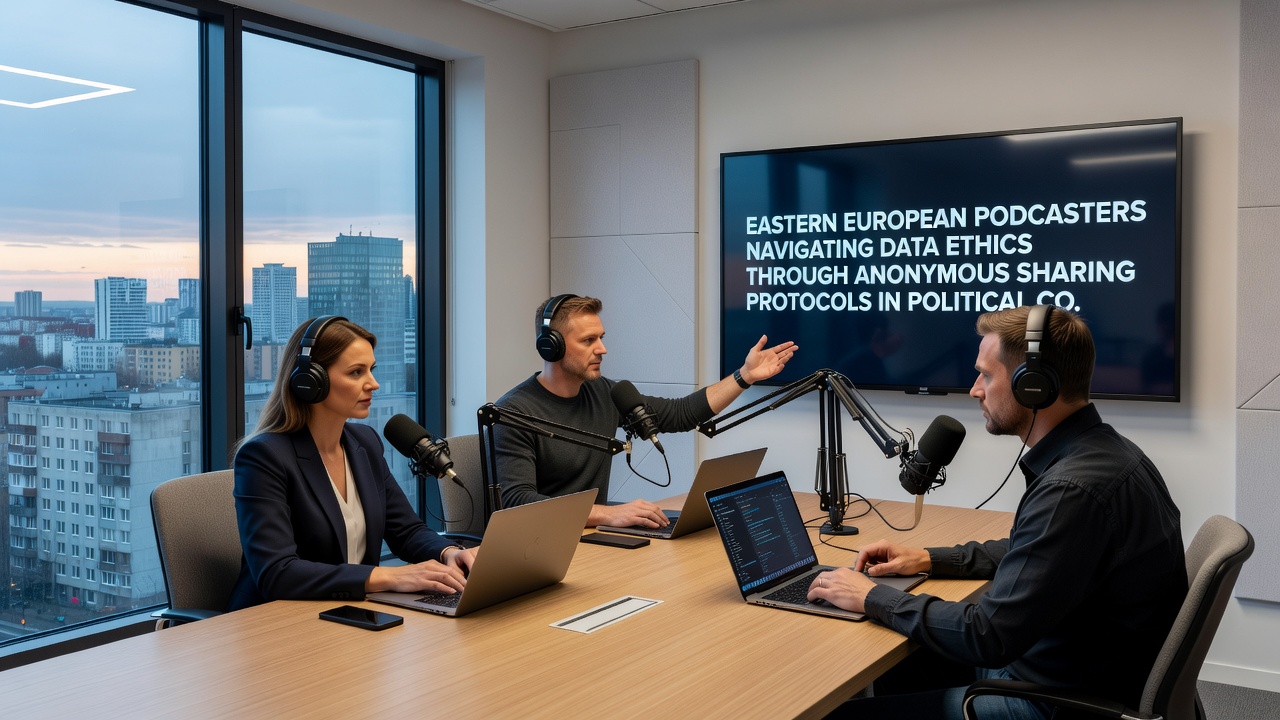
Podcasters across Eastern Europe have turned to anonymous sharing protocols as a practical response to data ethics challenges that arise when covering political topics, and these methods allow contributors to submit information without revealing personal identifiers while maintaining the integrity of the reporting process. In countries where political sensitivities run high, such protocols have become integrated into daily workflows at independent audio outlets operating in Poland, Hungary, Romania, and neighboring states.
Context of Political Coverage and Data Risks
Political reporting through podcasts often relies on tips, documents, and interviews that carry legal or personal risks for sources, yet traditional recording and storage practices can expose metadata that links individuals to sensitive claims. Observers note that podcasters have responded by adopting layered encryption and zero-knowledge verification systems that strip identifying details before any material reaches production teams, and this approach aligns with broader regional efforts to comply with evolving digital privacy standards.
Data from multiple monitoring organizations indicates that political podcast episodes discussing government policy or elections increased by more than 40 percent between 2023 and 2025 in the Visegrád Group countries, while instances of source harassment reports rose in parallel. Researchers at institutions such as the Central European University have documented how metadata leaks from unsecured file transfers led several outlets to pilot anonymous protocols as early as 2024, and those pilots expanded significantly after regulatory updates took effect.
How Anonymous Sharing Protocols Function in Practice
Anonymous sharing protocols typically combine end-to-end encrypted upload portals with blockchain-based timestamping that records submission times without storing user IP addresses or device fingerprints. Podcasters receive content through these channels, then verify authenticity via cryptographic hashes rather than direct follow-up interviews that might compromise safety, and the entire workflow keeps contributor identities separated from editorial notes throughout the production cycle.
One independent network based in Budapest implemented a custom protocol in late 2025 that routes all political source material through decentralized servers located outside the EU, and staff there report that the system reduced identifiable data points to near zero while still allowing fact-checkers to cross-reference public records. Similar setups have appeared in Bratislava and Sofia, where local teams adapted open-source tools originally developed for investigative journalism networks.
Regulatory Landscape and October 2026 Developments
European data protection frameworks continue to shape how these protocols operate, and the European Data Protection Board issued clarification documents that explicitly address anonymized media submissions. In October 2026, several national authorities in Eastern Europe began requiring podcasters who handle political content above a certain audience threshold to document their anonymization methods in annual compliance filings, and this requirement has prompted further refinement of existing tools rather than wholesale replacement.
Industry groups such as the European Podcast Association have compiled case studies showing that outlets using anonymous protocols experienced fewer legal inquiries related to source protection compared with those relying on conventional encrypted email exchanges. Figures released by the association reveal that adoption rates among political-focused shows reached 68 percent in the surveyed Eastern European markets by mid-2026, and training programs offered through university media departments have incorporated modules on these systems.
Implementation Challenges and Technical Adjustments
Despite clear advantages, implementing anonymous protocols introduces technical hurdles that smaller teams must navigate, including bandwidth limitations when handling large audio files through decentralized networks and the need for ongoing staff training on cryptographic verification steps. Podcasters in smaller markets have formed informal consortia to share server resources, and this collaboration has lowered costs while maintaining protocol standards across borders.
Academic studies from the University of Toronto's Citizen Lab have examined comparable systems in other regions and found that well-designed anonymous protocols maintain source protection even under targeted surveillance, provided regular security audits occur. Eastern European teams have applied these findings by scheduling quarterly reviews that test protocol resilience against simulated metadata extraction attempts, and results from those reviews feed directly into protocol updates.
Conclusion
Eastern European podcasters continue to refine anonymous sharing protocols as political coverage demands grow, and the combination of regulatory pressure with practical source protection needs has driven steady technical evolution. Data shows measurable adoption across the region, while external research provides benchmarks that local teams adapt to their specific environments, and this pattern suggests further integration of such methods in the years ahead.